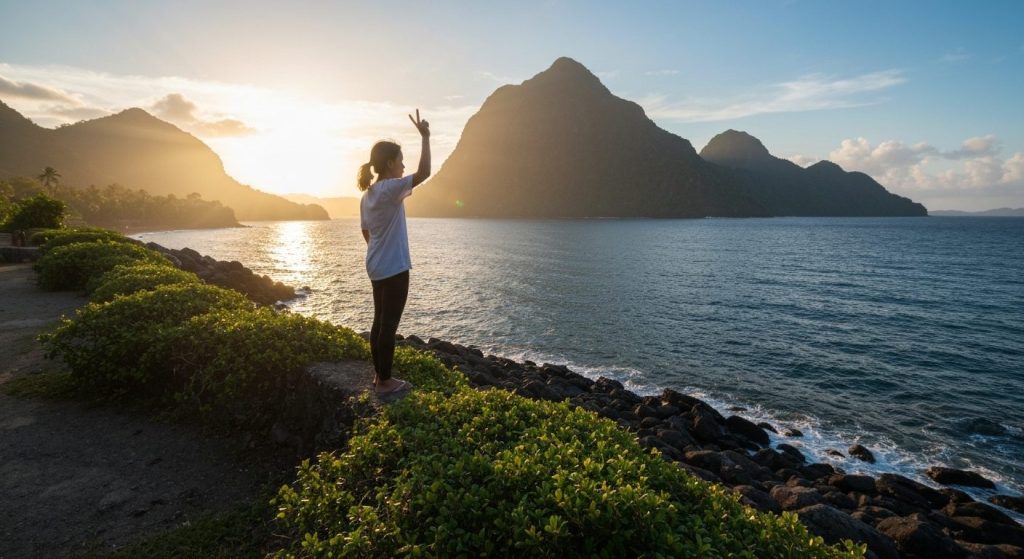
For investors considering `west manggarai investment property`, the scope extends far beyond Labuan Bajo’s immediate township. This guide provides a detailed look at the broader `flores island property investment opportunity` within West Manggarai (Manggarai Barat) and the wider Flores corridor, outlining specific zones, property types, and the critical considerations for sound decision-making.
## The Strategic Context: Labuan Bajo as a Growth Engine
Labuan Bajo, once a quiet fishing village, has rapidly transformed into a major tourism hub and the designated gateway to Komodo National Park. This transformation is not accidental; it is the result of focused government investment and policy, positioning Labuan Bajo as a super-priority destination. Understanding this core driver is essential for any `east nusa tenggara investment labuan bajo`.
The strategic importance of Labuan Bajo stems from its unique natural assets, primarily its proximity to Komodo National Park, a UNESCO World Heritage site. This access draws a consistent flow of international and domestic tourists, creating demand for accommodation, dining, and related services. The government’s investment in infrastructure has further solidified its role. Komodo Airport (LBJ) has seen significant upgrades, accommodating larger aircraft and increasing flight frequencies. Road networks within and around Labuan Bajo have been improved, connecting key areas and facilitating easier access for both tourists and developers. The port facilities, crucial for the liveaboard and island-hopping tourism sector, have also been enhanced to manage increased traffic and service quality.
This concentrated development in Labuan Bajo inevitably creates a ripple effect. As prime land within the town becomes scarcer and more expensive, the growth naturally spills over into surrounding areas. This dynamic forms the basis for exploring `labuan bajo gateway komodo investment zone` opportunities, where the proximity to the established hub and the `komodo national park nearby investment land` becomes a primary value driver. Investors are increasingly looking at areas that can benefit from Labuan Bajo’s success without facing its highest land acquisition costs or congestion.
## West Manggarai & Flores: Beyond the Immediate Shoreline
While Labuan Bajo remains the central point, the true scope of `manggarai barat property investment` extends across the regency and into the broader Flores Island. This expansion is driven by several factors: the search for more affordable land, the desire for larger development plots, and the exploration of diverse tourism experiences beyond Komodo National Park.
Flores Island itself offers a diverse landscape, from volcanic mountains and crater lakes to pristine coastlines and traditional villages. This diversity supports a range of tourism activities, including trekking, cultural tours, diving, and agri-tourism. Therefore, `flores island tourism business investment` opportunities are not limited to marine activities but encompass a wider spectrum of experiences that cater to different traveler segments.
The shift towards these wider areas also reflects a strategic move by some investors to capture the “next wave” of development. While Labuan Bajo’s initial boom focused on hotels, restaurants, and tour operators directly serving the Komodo market, the surrounding regions open up possibilities for eco-lodges, agricultural ventures, cultural homestays, and more expansive resort developments that require larger land parcels. This geographical expansion means considering `komodo district property investment options` that are not directly adjacent to the national park but still benefit from its halo effect and the improving infrastructure of West Manggarai.
## Key Investment Zones Radiating from Labuan Bajo
Understanding the specific characteristics of different sub-zones around Labuan Bajo is crucial for making informed decisions. Each area presents unique advantages, challenges, and indicative price points.
### North of Labuan Bajo: Batu Cermin & Waecicu
Areas immediately north of Labuan Bajo, such as Batu Cermin and Waecicu, are among the first to experience the spillover effect from the town’s growth. Their primary appeal is proximity to the airport and Labuan Bajo town center, often offering elevated land with expansive ocean views.
`Labuan Bajo Batu Cermin land` is particularly sought after for private villas and boutique accommodations. The terrain here can be hilly, often providing panoramic vistas of the surrounding islands and sunsets. Access roads have improved significantly, making these areas more viable for residential and commercial development. Water and electricity infrastructure is generally more accessible here compared to more remote locations, though specific plot access still needs verification.
Waecicu, slightly further north, offers a mix of beachside and hillside plots. It is known for its calmer waters and direct access to small coves, making it attractive for beach clubs, resorts, and private residences with direct water access. The indicative price ranges here reflect their prime location and development potential.
* **Land Types:** Predominantly hillside, some beachfront/coastal plots.
* **Tourism Angles:** Private villas, boutique resorts, guesthouses, small F&B outlets.
* **Indicative Price Range (Land per square meter, last verified June 2026):**
* **Batu Cermin (Hillside with view, good access):** IDR 3,000,000 – 8,000,000+
* **Waecicu (Coastal/Hillside with view):** IDR 4,000,000 – 10,000,000+
### South of Labuan Bajo: Warloka & Gorontalo
Moving south from Labuan Bajo, areas like Warloka and Gorontalo present opportunities for larger-scale developments and those seeking a more secluded environment while still being relatively close to the main hub. `Labuan Bajo Warloka development` is increasingly on the radar for investors looking beyond the immediate confines of the town.
Warloka, accessible by a developing road network, offers significant stretches of coastline and rolling hills. This area is suitable for integrated resorts, larger villa complexes, or eco-tourism initiatives that require substantial land parcels. The views here often encompass open ocean and distant islands, providing a sense of tranquility and exclusivity. As `manggarai barat land near labuan bajo` becomes more scarce directly around town, Warloka offers a compelling alternative for substantial projects.
Gorontalo, further south, is even more undeveloped but holds long-term potential. Its appeal lies in its raw natural beauty, less disturbed marine ecosystems, and the opportunity for truly unique, environmentally sensitive developments. Infrastructure here is still rudimentary, requiring significant investment, but the entry prices for land reflect this.
* **Land Types:** Expansive coastal plots, rolling hills, some agricultural land.
* **Tourism Angles:** Large resorts, eco-lodges, wellness retreats, dive centers (with appropriate permits).
* **Indicative Price Range (Land per square meter, last verified June 2026):**
* **Warloka (Coastal/Hillside, developing access):** IDR 1,500,000 – 5,000,000
* **Gorontalo (Remote coastal, limited access):** IDR 500,000 – 2,000,000
### Golo Mori and the KEK (Special Economic Zone)
Golo Mori has emerged as a focal point for strategic development, primarily due to the establishment of a Special Economic Zone (KEK) dedicated to tourism. The KEK status implies specific government incentives, streamlined permitting processes, and dedicated infrastructure development, aiming to attract significant investment.
The government’s commitment to Golo Mori is evident through substantial infrastructure projects, including a convention center, improved road access, and utility provisions. This area is envisioned as a center for MICE (Meetings, Incentives, Conferences, Exhibitions) tourism, alongside high-end resorts and integrated tourism complexes. Investors in the KEK can potentially benefit from tax holidays, import duty exemptions, and simplified business licensing, although specific conditions apply and require detailed consultation with BKPM (Indonesia Investment Coordinating Board).
However, investing within a KEK often comes with specific development mandates and timelines. While the incentives are attractive, the projects must align with the KEK’s master plan and objectives. This zone represents a significant `komodo district property investment option` for larger, well-capitalized developers seeking government support and a structured environment.
* **Land Types:** Designated zones within the KEK, potentially government-owned or managed.
* **Tourism Angles:** Integrated resorts, convention centers, high-end hospitality, MICE facilities.
* **Indicative Price Range (Land per square meter, last verified June 2026):**
* **Golo Mori KEK (Leasehold/Specific Development Rights):** Prices are typically structured through long-term leases or specific development agreements, less often outright freehold purchase, varying significantly based on project scale and KEK terms. Direct land sales outside the KEK but nearby might range IDR 1,000,000 – 3,000,000.
### The Trans-Flores Axis: Ruteng, Bajawa, Ende, Maumere
Beyond the immediate coastal zones of West Manggarai, the Trans-Flores highway opens up a vast corridor of `flores island tourism business investment` opportunities, offering a different flavor of tourism and investment profile. This axis connects Labuan Bajo to the central and eastern parts of Flores, including towns like Ruteng, Bajawa, Ende, and Maumere.
* **Ruteng:** Known as the “cool city” due to its higher elevation, Ruteng is surrounded by lush rice fields (including the unique spiderweb fields of Cancar), traditional villages, and coffee plantations. Investment here might focus on eco-lodges, homestays, or agricultural tourism (agri-tourism) ventures. The pace of life is slower, and the investment scale typically smaller, appealing to those seeking cultural immersion or sustainable tourism projects.
* **Bajawa:** Home to the Ngada traditional villages (Bena and Wae Rebo, though Wae Rebo is a multi-day trek), hot springs, and impressive volcanic landscapes, Bajawa offers strong cultural and adventure tourism potential. `Flores island property investment opportunity` here could involve guesthouses, small adventure tour operators, or F&B establishments catering to trekkers and cultural tourists.
* **Ende:** Famous for Kelimutu National Park with its three distinct colored crater lakes, Ende is a significant cultural and historical center. Investment could target accommodation, F&B, or tour services for visitors to Kelimutu.
* **Maumere:** Located on the eastern coast, Maumere serves as another entry point to Flores via its airport. It offers excellent diving and snorkeling spots, though less known than Komodo. Opportunities include dive resorts, homestays, or services supporting marine tourism.
Investment along the Trans-Flores axis generally involves lower land acquisition costs compared to Labuan Bajo and its immediate surroundings. However, it also typically comes with lower immediate tourist volumes and requires a longer-term vision for development. Infrastructure, particularly roads, is improving, but utilities can be less reliable in more remote areas.
* **Land Types:** Agricultural land, village plots, some hillside with views.
* **Tourism Angles:** Homestays, cultural tours, agri-tourism, eco-lodges, adventure tourism.
* **Indicative Price Range (Land per square meter, last verified June 2026):**
* **Ruteng/Bajawa/Ende/Maumere (Town outskirts, rural with access):** IDR 100,000 – 1,000,000
## Understanding Property Types and Usage
Investors in `komodo district property investment options` and wider Flores can consider various property types, each with distinct operational models and potential yields.
* **Land:** Raw land is the entry point for development. It requires understanding zoning (RTRW), land certificates (Hak Milik, Hak Guna Bangunan – HGB, Hak Pakai), and potential restrictions. Land can be acquired for building villas, resorts, or for speculative holding.
* **Villas/Homestays:** These are generally smaller-scale accommodations, ideal for short-term rentals. Villas typically offer more amenities and privacy, while homestays provide a more immersive local experience. Both can generate good rental yields, especially if well-managed and marketed to the right tourist segments.
* **Resorts:** Larger developments that include multiple accommodation units, F&B facilities, swimming pools, and other amenities. Resorts require significant capital investment, professional management, and a robust marketing strategy. They cater to a broader range of tourists, from families to luxury travelers.
* **Tourism Businesses:** This category includes a wide array of `flores island tourism business investment` opportunities that don’t necessarily involve owning land or physical accommodation. Examples include:
* **Dive Centers:** Operating dive tours, PADI certifications, equipment rental. Requires experienced staff, boats, and permits.
* **F&B Establishments:** Restaurants, cafes, bars. Success depends on location, quality of food/service, and branding.
* **Boat/Phinisi Operators:** Owning and operating traditional or modern boats for island hopping, liveaboards, or private charters. High operating costs but significant revenue potential.
* **Tour & Travel Agencies:** Arranging itineraries, transport, and guides for various Flores experiences.
* **Adventure/Eco-Tourism Operators:** Organizing trekking, kayaking, cycling, or birdwatching tours.
The choice of property type depends on an investor’s capital, risk appetite, operational expertise, and long-term vision. Each type demands specific operational considerations and market understanding.
## Indicative Price Tiers and Valuation Considerations
Land prices in West Manggarai and Flores are highly variable, influenced by factors such as:
* **Proximity to Labuan Bajo and Komodo National Park:** Generally, closer means higher prices.
* **Ocean Frontage/Views:** Direct beach access or panoramic ocean views command premium prices.
* **Road Access:** Plots with good, paved road access are more valuable than those requiring significant infrastructure development.
* **Infrastructure Availability:** Access to electricity, water, and internet services.
* **Zoning (RTRW):** Land designated for tourism or commercial development is typically more valuable than agricultural land.
* **Land Certificate Type:** Hak Milik (freehold) is generally the most desirable and highest priced.
Here’s a simplified comparison of indicative land price ranges (per square meter) across key zones, last verified June 2026:
- Labuan Bajo Town Center (Prime Commercial)
- IDR 10,000,000 – 30,000,000+
- Batu Cermin/Waecicu (Hillside/Coastal with View)
- IDR 3,000,000 – 10,000,000+
- Warloka (Developing Coastal/Hillside)
- IDR 1,500,000 – 5,000,000
- Golo Mori KEK (Specific Leasehold/Development Rights)
- Varies by KEK terms; nearby non-KEK land IDR 1,000,000 – 3,000,000
- Trans-Flores Axis (Ruteng, Bajawa, Ende, Maumere – Rural/Town Outskirts)
- IDR 100,000 – 1,000,000
These figures are indicative only. Actual prices are subject to negotiation, specific plot characteristics, and market dynamics at the time of inquiry. It’s vital to remember that these are asking prices, and thorough due diligence often reveals the true market value and any associated costs.
## Investment Landscape: Critical Due Diligence
Regardless of the zone or property type, comprehensive due diligence is non-negotiable for any `west manggarai investment property`. Neglecting these steps can lead to significant financial loss and legal complications.
* **Land Certificates:** Always verify the authenticity and type of land certificate. The most secure is Hak Milik (Freehold Title), primarily available to Indonesian citizens. Foreign investors typically utilize Hak Guna Bangunan (HGB – Right to Build) or Hak Pakai (Right to Use) titles, often through a PT PMA (foreign-owned company) structure. Each has specific terms, duration, and renewal conditions. A licensed Notary/PPAT (Public Notary and Land Deed Official) is essential for this verification process. They will conduct a title search at the local Land Office (BPN).
* **Zoning Regulations (RTRW – Rencana Tata Ruang Wilayah):** Before committing to any land purchase, confirm the spatial zoning plan for the specific plot. The RTRW outlines permitted land uses (e.g., residential, commercial, tourism, agricultural, protected forest). Developing land outside its designated zone can result in heavy fines, demolition orders, or revocation of permits. Your licensed Notary/PPAT or a local planning consultant can assist with obtaining and interpreting the RTRW.
* **Environmental Impact Assessment (AMDAL):** For larger developments or projects with potential environmental effects, an AMDAL (Analisis Mengenai Dampak Lingkungan) may be required. This assessment ensures the project complies with environmental regulations and is sustainable. Failure to obtain necessary environmental approvals can halt construction and lead to legal issues.
* **Local Community Engagement:** Building positive relationships with local communities is crucial for long-term success. Understanding local customs, employment expectations, and potential community benefits from your project can prevent disputes and foster a supportive environment.
* **Professional Guidance:** Never proceed without engaging licensed professionals:
* **Licensed Notary/PPAT:** Essential for land title verification, drafting sale-purchase agreements, and ensuring legal transfer of property.
* **BKPM (Indonesia Investment Coordinating Board) / OSS (Online Single Submission):** For foreign investors, establishment of a PT PMA and obtaining necessary business licenses and permits is critical.
* **Tax Professional:** Understanding Indonesian tax laws, including property taxes, income tax, and potential capital gains tax, is vital for financial planning and compliance.
* **Local Legal Counsel:** For specific advice on contract law, dispute resolution, or complex regulatory matters.
This level of due diligence safeguards your investment and ensures compliance with Indonesian law.
If you’re considering a property or business venture in these areas, and need help understanding the nuances of land titles, local regulations, or connecting with vetted professionals, we can guide you through the process. Plan your trip to Labuan Bajo and West Manggarai by reaching out to us via WhatsApp for a preliminary discussion.
## Risks and Challenges to Acknowledge
While the growth prospects for West Manggarai and Flores are considerable, responsible investors must also acknowledge the inherent risks and challenges.
* **Regulatory Changes:** Indonesia’s regulatory environment can evolve, impacting land use, investment incentives, or business operations. Staying informed through local professionals is key.
* **Infrastructure Pace:** While improving, infrastructure development in more remote areas can be slower than anticipated. Access to reliable electricity, water, internet, and adequate roads may require private investment or a longer wait.
* **Environmental Considerations:** The region’s natural beauty is its primary asset. Developers must adhere to strict environmental protection guidelines, especially in coastal and marine areas. Over-development or unsustainable practices pose significant reputational and regulatory risks.
* **Land Disputes:** Although less common with proper due diligence, historical land claims or boundary disputes can arise, particularly in areas with informal land ownership histories. A thorough title search and clear demarcation are paramount.
* **Market Saturation in Specific Niches:** As Labuan Bajo grows, certain market segments (e.g., budget guesthouses) may experience increased competition. Diversifying investment or targeting underserved niches can mitigate this.
* **Force Majeure:** Natural events (earthquakes, tsunamis, volcanic activity) are a reality in the Ring of Fire. Insurance and robust building standards are necessary.
## Your Next Steps in West Manggarai Investment
The investment landscape in West Manggarai and the wider Flores region offers clear opportunities for growth, driven by the sustained development of Labuan Bajo as a tourism gateway. However, success hinges on careful research, realistic expectations, and rigorous due diligence.
Remember, the information provided here serves as a general guide. It is not financial, legal, or real estate advice. Before committing any capital, it is imperative to consult with licensed Indonesian property notaries (PPAT), legal professionals, tax advisors, and the Indonesia Investment Coordinating Board (BKPM) to ensure your investment aligns with current regulations and your specific objectives.
We are here to provide researched information and connect you with the vetted, licensed professionals who can offer the precise advice you need.
### Frequently Asked Questions
### What is the most common land title for foreign investors in West Manggarai?
Foreign investors in Indonesia cannot directly own Hak Milik (Freehold Title) land. The most common and secure method is through establishing a PT PMA (foreign-owned company) and acquiring Hak Guna Bangunan (HGB – Right to Build) or Hak Pakai (Right to Use) titles. HGB is typically for commercial developments, while Hak Pakai is for individual use or smaller ventures. Both have specific durations and renewal processes. Always consult a licensed Notary/PPAT for detailed guidance.
### How do I verify the zoning of a potential property in West Manggarai?
To verify the zoning, you need to consult the Rencana Tata Ruang Wilayah (RTRW) or Spatial Plan of West Manggarai Regency. This document outlines permitted land uses for different areas. A licensed Notary/PPAT or a local planning consultant can assist you in obtaining the official RTRW map and interpreting it for your specific plot of interest. This step is critical to ensure your planned development is permissible.
### What are the typical taxes associated with property ownership in West Manggarai?
Property ownership in Indonesia involves several taxes. These typically include Property Tax (Pajak Bumi dan Bangunan – PBB), paid annually to the local government. When buying or selling property, there are also acquisition taxes (BPHTB – Bea Perolehan Hak atas Tanah dan Bangunan) paid by the buyer, and income tax (Pajak Penghasilan – PPh) on the sale value paid by the seller. For foreign-owned companies (PT PMA), corporate income tax on profits from property operations will also apply. Consulting a licensed tax professional is essential to understand your specific obligations.
### What is the Golo Mori KEK, and what are its benefits?
The Golo Mori KEK (Special Economic Zone) is a government-designated area intended to accelerate tourism development. Its benefits for investors can include tax incentives (e.g., corporate income tax holidays or reductions), customs and excise duty exemptions, streamlined licensing processes, and dedicated infrastructure support. However, investment within a KEK often comes with specific development requirements and timelines that must align with the KEK’s master plan. Detailed consultation with BKPM (Indonesia Investment Coordinating Board) is necessary to understand the specific terms and conditions.
### Can I operate a tourism business in West Manggarai without owning land?
Yes, it is possible to operate a tourism business without direct land ownership. Many tourism businesses, such as boat charter operations, dive centers, tour agencies, or F&B outlets, can operate from leased premises or even mobile platforms (for boats). However, you will still need to establish a legal entity (e.g., PT PMA for foreign investors) and obtain all necessary business licenses and permits from the relevant government bodies (e.g., local tourism office, Ministry of Transportation for marine activities).
Ready to explore `west manggarai investment property` opportunities with confidence? Let us connect you with the right local experts. Plan your trip to Labuan Bajo now, or reach out via WhatsApp for a direct consultation. No one can pay to change what we publish; if you proceed with our partner they may pay us a referral fee at no extra cost to you.