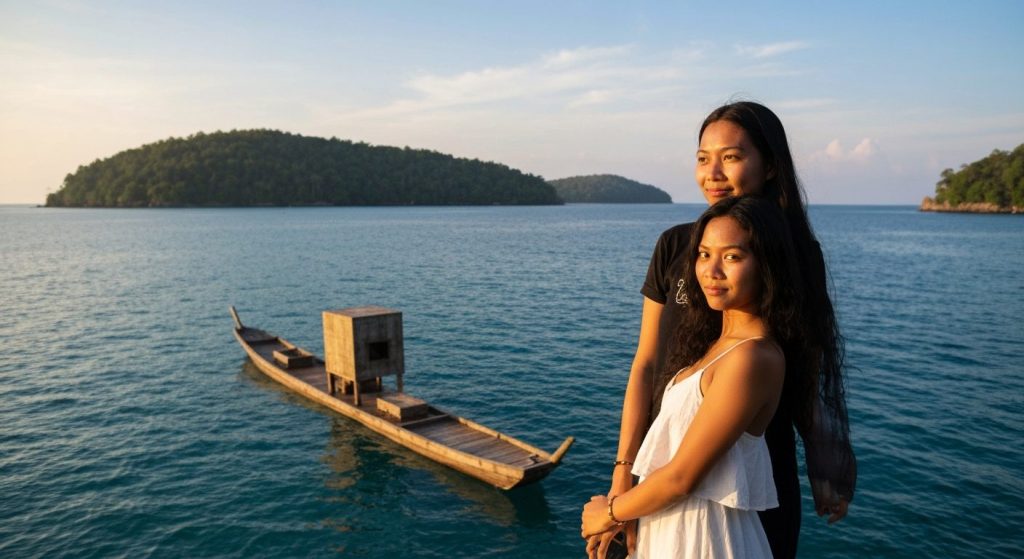
Labuan Bajo resort investment, particularly in hotel and accommodation development, presents a compelling opportunity driven by a significant demand-supply gap in one of Indonesia’s Super Priority Tourism Destinations. This guide offers a plain-language overview of the market dynamics, capital requirements, and regulatory framework for those considering a Labuan Bajo hotel investment.
Investing in Labuan Bajo’s accommodation sector means engaging with a market in rapid evolution. The region, primarily West Manggarai and its capital Labuan Bajo, serves as the gateway to Komodo National Park and an expanding array of land-based adventures across Flores. While visitor numbers have surged, the existing hotel and resort infrastructure often struggles to keep pace, creating a measurable `labuan bajo accommodation shortage hotel room gap` that savvy investors can address.
## The Labuan Bajo Accommodation Shortage: A Key Opportunity Driver
Labuan Bajo’s transformation from a sleepy fishing village to a global tourism hub has been swift. Government-led infrastructure improvements, including the expanded Komodo Airport (LBJ), improved road networks, and enhanced utilities, have catalyzed visitor growth. However, the growth in room supply, while active, has not always mirrored the demand, especially for mid-range to higher-end accommodations and specialized concepts like eco-resorts or dive resorts.
For instance, pre-pandemic growth rates for international arrivals to LBJ were consistently high, often exceeding 20% year-on-year. While the pandemic brought a temporary halt, recovery has been robust, with domestic tourism leading the charge and international arrivals steadily climbing back. Industry data from mid-2023 indicated average hotel occupancy rates often exceeding 70% during peak seasons, with major holidays pushing some properties to near 100% capacity. This consistent high occupancy, even with new properties opening, underscores the persistent `labuan bajo accommodation shortage hotel room gap`.
The current landscape sees a mix of budget guesthouses, a handful of established mid-range hotels, and a growing but still limited number of international-standard resorts. There’s a particular need for:
* **Mid-tier hotels:** Catering to the increasing number of domestic tourists and value-conscious international travelers.
* **Boutique hotels:** Offering unique experiences and personalized service.
* **Eco-resorts:** Focusing on sustainability and immersive nature experiences, aligning with the region’s natural appeal.
* **Dive resorts:** Specialized facilities for the significant number of scuba diving enthusiasts drawn to Komodo’s marine biodiversity.
This `labuan bajo hotel land development opportunity` is not just about building more rooms; it’s about developing the right *kind* of rooms and experiences to serve a diversifying traveler base.
## Realistic Capital and Budget Breakdowns for Labuan Bajo Hotel & Resort Development
Understanding the financial commitment is critical for any `labuan bajo resort investment`. Figures here are illustrative ranges, reflecting market conditions last verified in June 2026. Actual costs will vary significantly based on location, land characteristics, design complexity, material choices, and prevailing labor rates. Always secure detailed quotes from licensed local contractors and consultants.
A typical `labuan bajo resort development budget breakdown` can be segmented into:
### 1. Land Acquisition Costs
Land is often the most variable and significant upfront cost. Prices depend heavily on proximity to the town center, accessibility, views (oceanfront, hill view), and existing infrastructure.
* **Prime Waterfront (Labuan Bajo town, Waecicu):** IDR 300 million to IDR 800 million+ per *are* (100 sqm). These plots are scarce and highly competitive.
* **Hillside with Ocean View (near town):** IDR 150 million to IDR 400 million per *are*. These offer strategic advantages for views but may require more complex site preparation.
* **Outskirts/Rural (within 30-60 min drive):** IDR 50 million to IDR 200 million per *are*. Suitable for larger-scale `labuan bajo eco resort development` or properties aiming for a more secluded experience.
* **Remote Islands/Coastal (outside Labuan Bajo town):** Highly variable. Can be lower per *are* but come with significant logistical challenges and higher infrastructure development costs (power, water, access).
A 1-hectare (100 *are*) plot in a good hillside location could range from IDR 15 billion to IDR 40 billion just for the land. Due diligence on land titles (Hak Milik, Hak Guna Bangunan, Hak Pakai) is paramount, requiring a licensed Notary/PPAT.
### 2. Construction Costs Per Key (Room)
This covers the structure, finishes, and basic utilities for each guest room unit. The cost per key varies wildly with the desired standard.
* **Budget/Standard Room:** IDR 250 million – IDR 400 million per key. (Basic materials, simple design, minimal amenities).
* **Mid-Range/Boutique Room:** IDR 400 million – IDR 800 million per key. (Better quality materials, thoughtful design, good-sized bathrooms, possibly a small terrace/balcony).
* **Upscale/Luxury Villa/Suite:** IDR 800 million – IDR 2 billion+ per key. (Premium materials, high-end finishes, private pools, larger footprints, integrated technology, complex architecture).
These figures generally include the common area allocation (lobby, restaurant, pool, back-of-house) divided by the number of keys. For a 20-key mid-range `labuan bajo hotel investment`, construction alone could run IDR 8 billion to IDR 16 billion.
### 3. Furniture, Fixtures, and Equipment (FF&E)
This category includes everything needed to make a room operational and comfortable, from beds and linens to TVs, mini-fridges, and decorative items. It also covers kitchen equipment, restaurant furniture, and common area furnishings.
* **Budget/Standard:** IDR 50 million – IDR 100 million per key.
* **Mid-Range/Boutique:** IDR 100 million – IDR 250 million per key.
* **Upscale/Luxury:** IDR 250 million – IDR 500 million+ per key.
FF&E costs for the common areas (restaurant, lobby, pool deck, back office) can add another IDR 1 billion to IDR 5 billion+ depending on scale and quality.
### 4. Soft Costs and Contingencies
These are non-construction costs crucial for project completion and legal compliance.
* **Professional Fees:** Architecture, engineering, interior design, landscape design, project management (typically 8-15% of construction cost).
* **Permits & Licenses:** IMB/PBG (building permit), OSS-RBA tourism licenses, environmental permits (AMDAL/UKL-UPL), fire safety, etc. (IDR 200 million – IDR 1 billion+ depending on scale and complexity).
* **Site Preparation:** Earthworks, retaining walls, access roads, drainage (highly variable, especially on sloped land).
* **Infrastructure Connection:** Water supply, electricity connection (PLN), internet, septic systems/wastewater treatment. Remote sites incur higher costs here.
* **Pre-Opening Expenses:** Marketing, staff training, initial inventory, operational setup.
* **Contingency:** A crucial budget line item, typically 10-15% of total project costs, to cover unforeseen issues, delays, or changes.
### Total `labuan bajo hotel investment cost capital` (Illustrative Example for a 20-Key Mid-Range Boutique Hotel)
* **Land (1 hectare, hillside, good view):** IDR 20 billion
* **Construction (20 keys x IDR 600M/key):** IDR 12 billion
* **FF&E (20 keys x IDR 150M/key + common areas):** IDR 3 billion + IDR 1.5 billion = IDR 4.5 billion
* **Soft Costs (12% of construction + FF&E):** IDR (12B + 4.5B) * 0.12 = IDR 2 billion
* **Site Prep/Infrastructure:** IDR 1.5 billion
* **Contingency (10% of total):** IDR (20B + 12B + 4.5B + 2B + 1.5B) * 0.10 = IDR 4 billion
* **Total Estimated Investment:** Approximately IDR 44 billion (USD 2.8 – 3 million, assuming IDR 15,500/USD)
This is a significant capital outlay. Investors should be prepared for potential cost overruns and delays. Engaging with a reputable local project manager and legal counsel from the outset is non-negotiable.
## Expected ROI, Yields, and Payback Periods
The `labuan bajo hotel resort investment roi` is highly dependent on factors such as location, management efficiency, branding, average daily rate (ADR), and occupancy levels. While attractive returns are possible, projections should be conservative and based on thorough market analysis.
### Return on Investment (ROI) and Yields
For well-managed properties in good locations, a typical annual ROI (Net Operating Income / Total Project Cost) can range from **8% to 15%**. Some high-performing, established properties may exceed this, while poorly managed or less strategically located assets may underperform.
**Key Revenue Drivers:**
* **Average Daily Rate (ADR):** For a mid-range property, ADRs might range from IDR 800,000 to IDR 1,800,000. Upscale resorts can command IDR 2,500,000 to IDR 5,000,000+ per night.
* **Occupancy Rate:** Aim for a stabilized annual occupancy of 60-75% after the initial ramp-up phase (1-2 years). Peak season (June-August, December-January) can see 85-95%+ occupancy, while low season (e.g., February-March) might dip to 40-50%.
* **Ancillary Revenue:** Food & Beverage (F&B), spa, excursions, dive operations, transfers, laundry. For many `labuan bajo resort development` projects, F&B and tours can significantly boost profitability.
**Key Cost Drivers:**
* **Operational Expenses (OpEx):** Staff salaries, utilities (electricity is a major cost, especially with AC and pools), maintenance, marketing, supplies, property taxes. These can typically consume 30-40% of gross revenue.
* **Debt Service:** If financed, loan repayments will significantly impact cash flow.
### `labuan bajo dive resort investment payback period`
Dive resorts often present a unique financial profile due to higher-margin activities. While the initial investment in dedicated dive facilities (compressors, boats, equipment, specialized training pools) can be substantial, the revenue stream from dive packages, courses, and equipment rental can accelerate payback.
* A dedicated `labuan bajo dive resort investment` might see a **payback period of 6-10 years**, potentially faster than a pure accommodation play, especially if it can consistently attract high-spending divers and run efficient operations.
* Successful dive resorts integrate accommodation, F&B, and a full-service dive center, offering multi-day packages that increase ADR and overall guest spend. The ability to control the entire guest experience, from arrival to departure, including all activities, is a powerful lever for profitability.
**Illustrative P&L (Annual for a 20-Key Mid-Range Hotel, stabilized operation):**
| Revenue Category | Est. Annual Revenue (IDR Billion) | Notes |
| :———————— | :——————————– | :———————————————- |
| Room Revenue (65% occupancy @ 1.2M ADR) | 5.6 | (20 keys * 365 days * 0.65 * 1,200,000) |
| F&B Revenue | 2.8 | Often 50% of room revenue for mid-range. |
| Other Ancillary (Tours, Spa) | 1.0 | Highly variable, depends on offerings. |
| **Total Gross Revenue** | **9.4** | |
| **Operating Expenses** | | |
| Staff Costs (30% of Rev) | 2.8 | Salaries, benefits, training. |
| Utilities (10% of Rev) | 0.9 | Electricity, water, internet. |
| Maintenance & Repairs | 0.5 | Ongoing upkeep. |
| Marketing & Sales | 0.5 | Online travel agents (OTAs), direct booking. |
| Other Admin & Supplies | 0.5 | Office, cleaning, insurance. |
| **Total Operating Expenses** | **5.2** | |
| **Gross Operating Profit (GOP)** | **4.2** | (9.4 – 5.2) |
| **Net Operating Income (NOI)** | **3.5** | (After property taxes, insurance, etc.) |
Based on a total investment of IDR 44 billion, an NOI of IDR 3.5 billion yields an ROI of approximately 8%. This is a conservative example; optimizing operations, increasing ADR, or enhancing ancillary revenue can significantly improve this.
**Remember:** These are projections. Actual performance can vary. Work with experienced local hospitality consultants for robust feasibility studies and financial modeling.
## Build Paths: Greenfield, Boutique Conversion, or Developer Partnership
Investors in `labuan bajo resort development` have several pathways to establishing an accommodation business. Each comes with distinct advantages and challenges.
### 1. Greenfield Development
This involves acquiring raw land and building a property from the ground up.
* **Pros:** Complete control over design, branding, and concept; ability to optimize for local conditions (views, sun exposure, sustainability); often results in a property tailored exactly to market needs (e.g., a pure `labuan bajo eco resort development`).
* **Cons:** Highest capital outlay; longest development timeline (18-36 months typically); significant regulatory hurdles (permits, licenses); higher risk profile; requires extensive local knowledge and project management.
* **Best For:** Investors with substantial capital, a clear vision, and a long-term perspective, or those looking to develop a large-scale resort or a highly specialized concept.
### 2. Boutique Conversion / Renovation
This path involves acquiring an existing property (perhaps an older guesthouse, villa, or even a large residential house) and converting or renovating it into a `labuan bajo boutique hotel investment business`.
* **Pros:** Shorter development timeline; potentially lower upfront capital (especially for purchase price); existing infrastructure (water, electricity) may be in place; faster market entry; often retains local character.
* **Cons:** Inherited issues (structural, legal, design limitations); renovation costs can sometimes approach new build costs if major overhauls are needed; less flexibility in design and layout; potential for unexpected expenses during renovation.
* **Best For:** Investors seeking a quicker entry to market, smaller scale projects, or those with a strong design vision for transforming existing spaces. This can be an effective way to enter the `labuan bajo boutique hotel investment business` segment.
### 3. Developer Partnership Investment
For those new to the Indonesian market or with less time for direct project management, partnering with an established local developer can mitigate risks.
* **Pros:** Leverage local expertise, networks, and construction capabilities; potentially faster permit acquisition; shared risk and capital; access to pre-vetted land or existing projects; can be a form of `labuan bajo developer partnership investment`.
* **Cons:** Less control over design and operations; profit sharing; careful due diligence required to select a reputable and financially stable partner; clarity on roles and responsibilities is crucial.
* **Best For:** Investors who prefer a more passive role, want to mitigate operational and development risks, or need local guidance for complex regulatory landscape. This approach is common for foreign investors seeking to pool resources and expertise.
Regardless of the chosen path, a detailed business plan, a robust feasibility study, and engagement with licensed local professionals are non-negotiable.
—
Considering a Labuan Bajo accommodation project? The landscape is dynamic, and local insights are invaluable. Let us help you navigate the initial steps.
Plan your trip now, or connect with us via WhatsApp to discuss your specific needs.
—
## Foreign Ownership and Licensing Realities in Indonesia
legal framework for property and business ownership as a foreign investor in Indonesia requires a clear understanding of the rules. While Indonesia is increasingly open to foreign investment, specific regulations apply to land tenure and business operations.
### PT PMA (Penanaman Modal Asing – Foreign Investment Company)
The primary vehicle for foreign investors to own and operate a business in Indonesia, including hotels and resorts, is through a PT PMA company.
* **Minimum Capital:** As of recent regulations, a PT PMA typically requires a minimum *stated* capital of IDR 10 billion (approximately USD 650,000, depending on exchange rates). The *paid-up* capital requirement is generally 25% of the stated capital, meaning IDR 2.5 billion must be paid into the company bank account upon establishment. This capital must be verifiable.
* **Shareholders:** A PT PMA can be 100% foreign-owned in many sectors, including hotels and resorts, under the current Negative Investment List (Daftar Prioritas Investasi).
* **Benefits:** Establishes a legal entity for operations, allows for various business licenses, and provides a framework for foreign employees (though local employment is strongly encouraged).
Establishing a PT PMA is a complex process requiring legal counsel, often taking several months.
### Land Tenure: HGB (Hak Guna Bangunan) and Hak Pakai
Foreign individuals cannot directly own freehold land (Hak Milik) in Indonesia. However, a PT PMA company can hold land rights.
* **Hak Guna Bangunan (HGB – Right to Build):** This is the most common form of land right for property development by a PT PMA. It grants the right to construct and possess buildings on state land or land owned by others for an initial period of **30 years**, extendable for another **20 years**, and renewable for a further **30 years**, totaling 80 years. This offers long-term security for resort development.
* **Hak Pakai (Right to Use):** While a PT PMA can hold Hak Guna Bangunan, foreign individuals (even under a PT PMA structure) might hold Hak Pakai for individual residential purposes. Hak Pakai grants the right to use land for a specified period, typically **25 years**, extendable for **20 years**, and renewable for another **25 years**, totaling 70 years. For commercial operations, HGB is generally preferred for its robustness.
It is crucial to work with a licensed Notary/PPAT (Pejabat Pembuat Akta Tanah – Land Deed Official) to verify land titles, conduct due diligence, and execute land transactions. Misunderstanding land rights is a common pitfall.
### OSS-RBA Tourism Licensing
Indonesia has streamlined business licensing through the Online Single Submission Risk-Based Approach (OSS-RBA) system.
* **NIB (Nomor Induk Berusaha – Business Registration Number):** This is your company’s primary identity, obtained first via OSS-RBA.
* **Risk-Based Licensing:** Businesses are categorized by risk level (low, medium, high). Hotel and resort operations generally fall into medium to high-risk categories, requiring specific permits beyond just the NIB, such as:
* **Izin Usaha Pariwisata (IUP):** Tourism Business License.
* **Sertifikat Standar Usaha Pariwisata:** Tourism Business Standard Certificate (for hotel classification, hygiene, safety).
* **Environmental Permits:** AMDAL (Analisis Mengenai Dampak Lingkungan – Environmental Impact Assessment) for larger projects or UKL-UPL (Upaya Pengelolaan Lingkungan dan Upaya Pemantauan Lingkungan – Environmental Management and Monitoring Efforts) for smaller ones.
* **Compliance:** All operational permits must be in place before opening. Failure to comply can result in fines, operational suspension, or even revocation of licenses.
### IMB/PBG Building Permits
* **IMB (Izin Mendirikan Bangunan – Building Permit):** This traditional permit has largely been replaced by the **PBG (Persetujuan Bangunan Gedung – Building Approval)** under the OSS-RBA system.
* **PBG Requirement:** You cannot commence construction without a valid PBG. This permit ensures your building plans comply with local zoning regulations, structural integrity standards, and safety codes. The process involves submitting architectural and engineering drawings for approval.
* **Complexity:** Obtaining a PBG can be time-consuming and requires detailed architectural and engineering plans. It’s a critical step to ensure your `labuan bajo resort development` is legally compliant and safe.
Navigating this regulatory landscape requires professional assistance. We consistently route our readers to vetted, licensed professionals, including notaries/PPATs for land matters, BKPM/OSS consultants for company establishment and licensing, and tax professionals for compliance. No one can pay to change what we publish; if you proceed with our partner they may pay us a referral fee at no extra cost to you.
## FAQs about Labuan Bajo Hotel & Resort Investment
### Is Labuan Bajo still a good place for hotel investment, or is it getting saturated?
While the number of hotels and resorts has increased, the `labuan bajo accommodation shortage hotel room gap` persists, especially for quality mid-range and specific niche segments like eco-resorts or dedicated dive resorts. The market is maturing, requiring more sophisticated offerings and professional management, but the underlying demand driven by Komodo National Park and Flores exploration remains strong. Strategic investment in unique concepts and underserved segments still holds significant promise.
### How long does it typically take to develop a new resort in Labuan Bajo?
From land acquisition to operational readiness, a greenfield `labuan bajo resort development` project typically takes **2 to 3 years**. This timeline includes land due diligence and purchase (3-6 months), PT PMA establishment and initial permits (3-6 months), architectural design and PBG approval (6-12 months), and construction (12-18 months). Delays in permitting or construction are common, so budgeting extra time is prudent.
### What are the main risks associated with Labuan Bajo resort development?
Key risks include:
* **Land Title Issues:** Inaccurate due diligence leading to disputes.
* **Permitting Delays:** Bureaucratic hurdles can significantly prolong timelines.
* **Cost Overruns:** Unexpected construction challenges, material price increases, or scope creep.
* **Infrastructure Limitations:** Reliance on generator power or limited water supply in remote areas.
* **Market Fluctuations:** Economic downturns, shifts in tourism trends, or unforeseen global events.
* **Management Challenges:** Difficulty in sourcing and retaining skilled staff, especially for higher-end properties.
Mitigating these requires thorough planning, robust contingency budgeting, and engagement with experienced local professionals.
### Can a foreign individual directly own land for a hotel in Labuan Bajo?
No, foreign individuals cannot directly own freehold land (Hak Milik) in Indonesia. To develop and operate a hotel or resort, foreign investors must establish an Indonesian legal entity, typically a PT PMA (Foreign Investment Company). This PT PMA can then acquire land rights such as Hak Guna Bangunan (HGB) or Hak Pakai, which provide long-term tenure for property development.
### What about `labuan bajo eco resort development`? Are there specific regulations or incentives?
`Labuan Bajo eco resort development` is highly encouraged given the region’s natural beauty and protected areas. While specific tax incentives for eco-resorts are not broadly formalized, the government does prioritize sustainable tourism initiatives. Key considerations include:
* **Environmental Permits:** Stricter AMDAL/UKL-UPL requirements may apply.
* **Design & Materials:** Use of local, sustainable materials, minimal environmental impact, waste management systems, renewable energy integration (solar power).
* **Community Engagement:** Involving local communities in employment and supply chains.
Developing an eco-resort aligns well with the evolving preferences of responsible travelers and can offer a strong market differentiator.
Investing in Labuan Bajo’s accommodation sector offers significant potential, but it demands careful planning, a clear understanding of market dynamics, and a commitment to local regulatory landscape. Our goal is to provide you with the researched information you need, empowering you to make informed decisions. Before committing any capital, always consult with licensed property agents, notaries, tax advisors, and legal professionals.
Ready to explore your options or connect with vetted local experts?
Plan your trip now, or reach out to us on WhatsApp. We’re here to help you understand the path forward.